
Shoulders that are painful, stiff or both
The shoulder trades stability for mobility, which makes it prone to rotator cuff tendon problems, bursitis, impingement and, in some people, frozen shoulder (adhesive capsulitis), where the joint capsule thickens and movement is lost for months. The right treatment depends on which of these you have, so a careful assessment comes first.
Common signs
- Pain reaching overhead, behind the back or lying on the affected side at night
- Gradual loss of movement, especially turning the arm outward, typical of frozen shoulder
- A painful arc when lifting the arm to the side, typical of impingement or rotator cuff irritation
- Weakness or clicking with overhead work and sport
How we treat shoulder pain
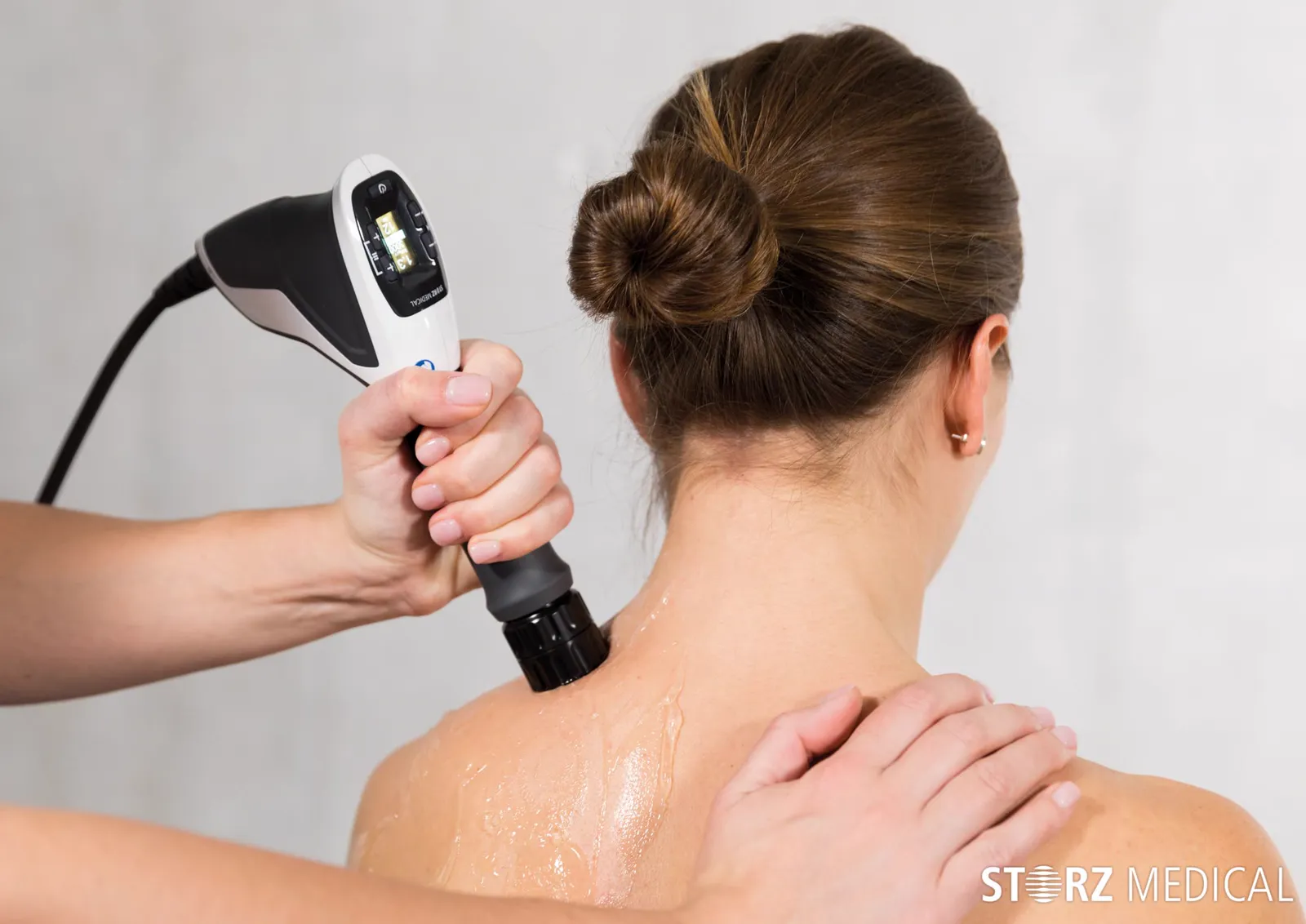
Osteopathy mobilises the shoulder joint, shoulder blade, upper back and neck, which together determine how well the shoulder moves. Focal Shockwave Therapy is particularly effective for calcific tendonitis and chronic rotator cuff tendinopathy. EMTT Therapy is a comfortable, non-contact option for frozen shoulder and arthritic shoulders, and Class IV Laser Therapy settles the bursa and tendons so you can sleep and move again.
Frozen shoulder takes time, but treatment shortens the painful phase and keeps the joint moving so the stiff phase is milder and shorter.
What to expect
Your first visit includes movement and strength testing to identify the structures involved. Treatment starts the same day and is combined with a home programme matched to the stage you are in. Rotator cuff and bursitis problems usually improve within a few weeks; frozen shoulder is managed over a longer course.